




Holi marks the end of winter and the beginning of spring in the Hindu calendar. This festival unfolds over 2 days: a ritual bonfire on the evening before, followed by the throwing of coloured powders the next morning. The date is determined by the full moon of the month of Phalguna, in February or March. In Mauritius, the Indo-Mauritian community continues to uphold this tradition, and our concierges at Legend Hill can guide our guests towards the most accessible celebrations.
Holika Dahan takes place on the night before the day of colours. Families light a large fire and burn effigies made of straw and bamboo, commemorating a central episode in Hindu mythology. This fire symbolises the destruction of evil and the protection granted to devotees.
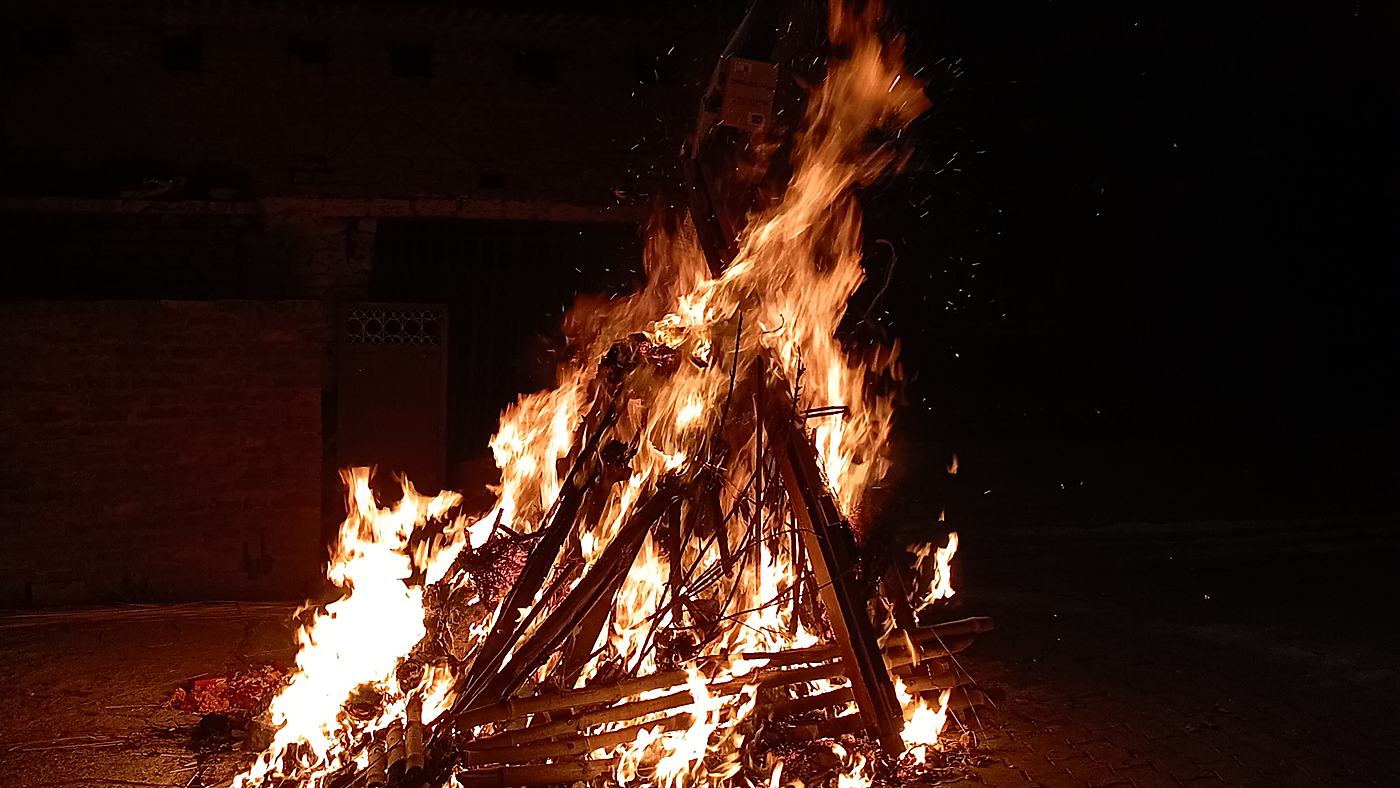
The legend tells the story of Holika, sister of the demon king Hiranyakashipu, who was tasked with killing his son Prahlad, a devoted follower of Vishnu. The story ends with a reversal of fortunes: Holika perishes in the flames, while the child emerges unharmed. This night gives the celebration its very name, and the bonfire remains its first ritual. Entire families gather around the fire, often in the courtyard of a village temple, where children add their own twigs.
The colour white plays a specific role in the celebrations. On the morning of the second day, participants wear white clothing precisely so that the colours stand out at their brightest against the fabric. Clothes worn that day can rarely be fully restored afterwards: it is best to choose an outfit you are prepared to sacrifice, and to tie back long hair.
The coloured powders, known as gulal, each carry a symbolic meaning inherited from Indian tradition. These pigments are sold by weight in markets, and women still prepare them at home using ingredients such as turmeric or dried flowers. Red represents love, joy and fertility, while green is associated with harmony and new beginnings. Orange and yellow express optimism and the returning light of spring.
Blue holds a special place: it recalls Krishna, who is often depicted with blue skin, and whose love story with Radha is at the heart of much of the folklore surrounding the festival. These colours are exchanged without hierarchy, between neighbours, generations and communities. The phrase traditionally called out on the occasion, “Bura na mano, Holi hai!”, essentially means: don’t take it personally, it’s Holi.
In Mauritius, this celebration is primarily associated with the Indo-Mauritian community, descended from indentured workers who came from northern India in the 19th century, a central chapter in the history of Mauritius. The tradition, however, extends far beyond this community and brings Mauritians of all backgrounds together around gulal, music and singing. Mauritian Hindus celebrate it as a community occasion, with a visit to a temple often preceding the throwing of colours. This cultural openness is one of the distinctive features of the Mauritian calendar.
One shift is worth pointing out: Holi celebrates the arrival of spring in the northern hemisphere. In Mauritius, February and March correspond instead to the end of the austral summer, its hottest and most humid stretch. The festival therefore keeps its Indian calendar but not its season: here it is experienced in the heat, often between two showers.
One further clarification: unlike Maha Shivaratree, Thaipoosam Cavadee, Ugaadi, Ganesh Chaturthi or Divali, Holi is not an official public holiday. Celebrations therefore take place at the end of the day or over the weekend, in neighbourhoods, courtyards and around local temples rather than along the main streets.
Mauritians are generally happy to welcome visitors into street celebrations, provided a few simple rules are observed. Here are some customs to keep in mind before joining in:
Children take part with infectious enthusiasm, and the clothes of the whole family inevitably end up covered in colour.
Our guests are often hesitant to come closer because they are afraid of disturbing the celebrations. The opposite is usually true: someone will simply place a little gulal in your hand, and suddenly you are part of the group. Just leave your camera at home.
Would you like to discover Mauritius at the pace of its traditions rather than through an organised tour? Book your stay at Legend Hill: our concierges can create a cultural itinerary around the island’s major celebrations.
Fancy experiencing Holi in a Mauritian neighbourhood?
Method: the public holiday status was verified in General Notice No. 611 from the Prime Minister's Office, in which Holi does not appear on the 2026 list; the lunar date, the legend of Holika and the symbolism of the colours were confirmed in the Encyclopædia Britannica; the origin of the Indo-Mauritian community is documented by the UNESCO listing for Aapravasi Ghat; and the field customs were supplied by the Legend Hill team, verified in September 2026. The seasonal shift between India and Mauritius is drawn from the Mauritian climate calendar.
Avi Rumjansing entered Mauritian hospitality in 2002 as a cashier at Indian Resort. Twenty years later, after Les Pavillons, the Mövenpick and fifteen years at Aanari Hotel & Spa as Front Office then Operations Manager, he runs the front desk at Legend Hill. He holds a BSc in Management from the Open University of Mauritius, and he is the one guests ask when to set off for the tea route.