



The history of Mauritius can be understood through a succession of four major periods: Dutch, French, British and, finally, independence. Discovered without any permanent inhabitants, this Indian Ocean island was named Mauritius in 1598, became Isle de France, and later a British colony before gaining independence in 1968. This colonial mosaic gave rise to a culturally diverse population, a unique Creole language and a UNESCO-listed heritage. Here are the key milestones to understand how this small island nation became the country you visit today.
The first settlers of Mauritius were the Dutch. In 1598, Admiral Wybrand van Warwijck landed at Grand Port and named the island Mauritius, in honour of Prince Maurice of Nassau. For nearly a century, the settlers exploited the ebony forests and introduced sugar cane, but eventually abandoned the island in 1710. It was during this period that the dodo, the country’s iconic bird, became extinct.
France took over in 1715, renaming the island Isle de France. The French East India Company subsequently entrusted its administration to Governor Mahé de La Bourdonnais. From 1735 onwards, he founded Port Louis, built roads and developed the first major infrastructure. This French influence remains visible throughout the history of Mauritius, from its architecture to its language.
Mauritius is part of the Mascarene archipelago, alongside Réunion and Rodrigues. Before acquiring its present name, it was known as Dina Arobi by Arab navigators and then as Cirne by the Portuguese. The famous novel Paul et Virginie, written by Bernardin de Saint-Pierre, is set on this eighteenth-century Isle de France.
Slavery represents the darkest chapter in the history of Mauritius. Under both French and British rule, tens of thousands of men, women and children were forcibly brought from Madagascar, East Africa and India and enslaved on sugar cane, coffee and indigo plantations. Their living and working conditions were extremely harsh. It was not until 1 February 1835 that British abolition brought freedom to around 66,000 enslaved people.
The sugar economy, however, continued to depend on the plantations. Plantation owners subsequently brought in indentured labourers from India, who worked under contracts but often endured extremely difficult conditions.
Between 1834 and 1920, nearly half a million Indian indentured labourers passed through Aapravasi Ghat in Port Louis. These men and women, who were subjected to exploitation for generations, helped shape the country’s identity:
This painful history continues to shape the memory and social fabric of Mauritian society.
The British colony began in 1810, when British forces seized the island following a conflict with France. The Treaty of Paris in 1814 formally confirmed British possession, and the British restored the name Mauritius. However, they retained the French Civil Code and the language of their predecessors.
The road towards self-government accelerated during the twentieth century. Led by the Labour Party and through successive elections, Sir Seewoosagur Ramgoolam guided the country to independence on 12 March 1968, becoming its first Prime Minister. Mauritius remained a member of the Commonwealth and later became a republic on 12 March 1992. The Ramgoolam and Jugnauth families have since had a lasting influence on Mauritian political life. This peaceful transition marked a major turning point in the history of Mauritius.
Mauritian heritage tells the story of the country’s entire history. Two sites are listed as UNESCO World Heritage Sites: Le Morne Brabant, a refuge for escaped enslaved people and a symbol of their resistance, and Aapravasi Ghat, the gateway through which Indian indentured labourers entered Mauritius in Port Louis. This history also lives on through the Creole language, spoken by the vast majority of Mauritians, and through a multicultural society shaped by African, Indian, Chinese and European influences.
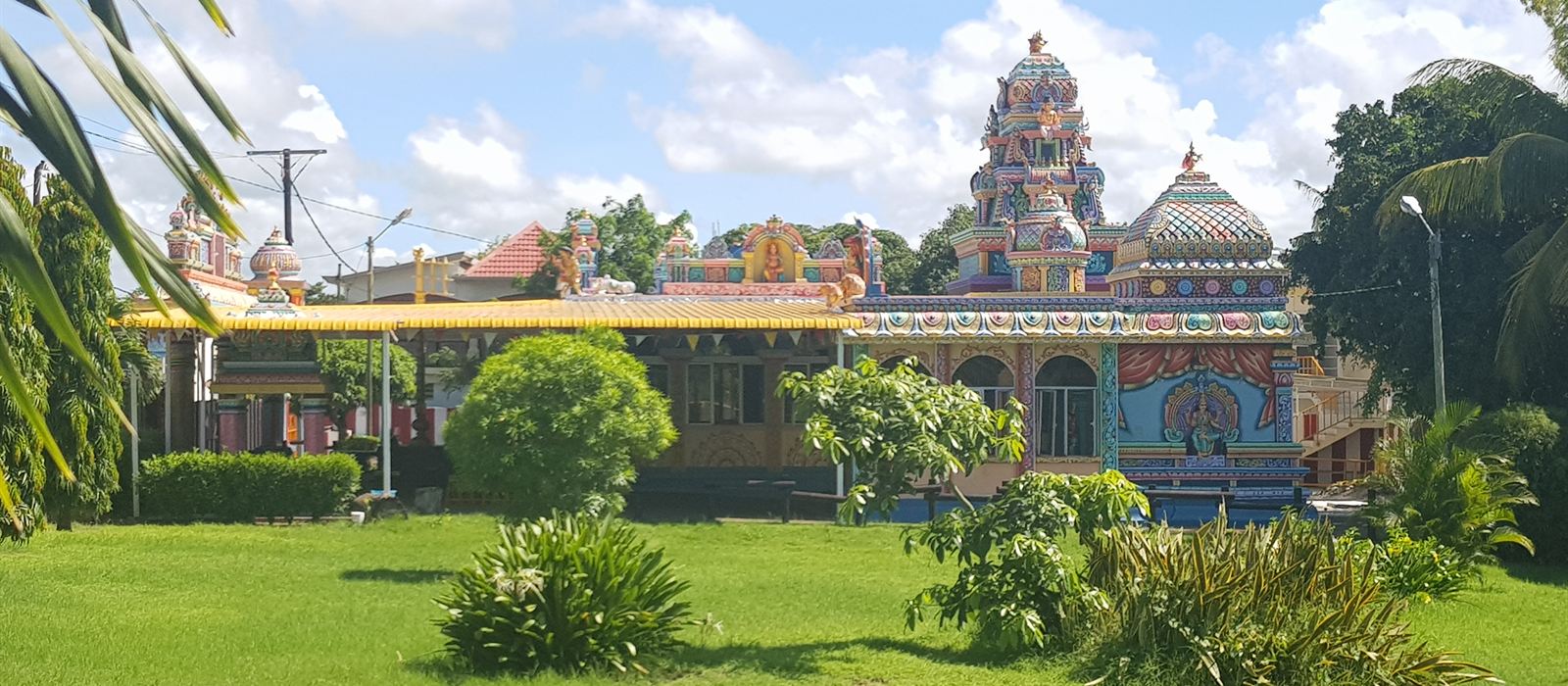
Would you like to discover the history of Mauritius in the very places where it was shaped? From our Legend Hill property, overlooking Le Morne Brabant and the turquoise lagoon, this heritage can be explored with the respect it deserves. Book your stay on the west coast and set out to discover this remarkable part of Mauritian history.
Want to explore Mauritius’ places of memory with a guide?
Method: dates, names and figures cross-checked against the two UNESCO World Heritage Centre inscription files (Aapravasi Ghat and Le Morne) and the collections of the National Archives Department of Mauritius, verified in August 2026. Estimates of the enslaved and indentured populations vary between sources; the orders of magnitude used here are those of the UNESCO files.
Avi Rumjansing entered Mauritian hospitality in 2002 as a cashier at Indian Resort. Twenty years later, after Les Pavillons, the Mövenpick and fifteen years at Aanari Hotel & Spa as Front Office then Operations Manager, he runs the front desk at Legend Hill. He holds a BSc in Management from the Open University of Mauritius, and he is the one guests ask when to set off for the tea route.