

There are landscapes we photograph. Others make us want to pick up a pencil, cook, build or compose.
In Mauritius, creativity is everywhere. It hangs on walls, finds its way onto plates, reveals itself in a piece of fabric, a Creole house, a few notes of sega or the way a garden has been designed. It would be easy to attribute this abundance to the island’s beauty, but that would be to miss the point, because perhaps Mauritius inspires not only through what we see, but through everything that comes together here.
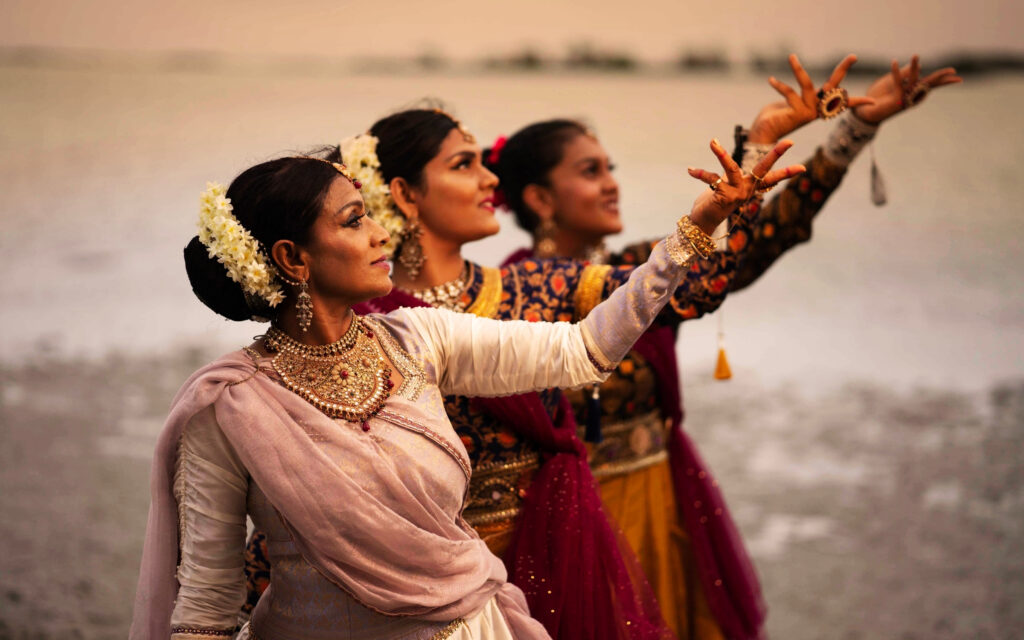
Across an island that can be crossed in just a few hours, African, European, Indian and Chinese influences have lived side by side for generations. They do not belong only to history books. They are heard in the languages of everyday conversations, seen in temples, churches and pagodas, felt in markets and celebrations — and perhaps most vividly, tasted in the kitchen:
In Mauritius, creating often means bringing things together without erasing what came before, and perhaps that is where part of the island’s power to inspire lies.
Then there is the light… The kind that leaves the lagoon hovering between shades of blue in the early morning. The kind that reveals every contour of the landscape with almost unreal precision at midday. And finally, the softer light that settles over the mountains as the day begins to fade.
For a painter, photographer, architect or designer, it constantly changes the perception of colour and material, yet no two people see it in quite the same way.
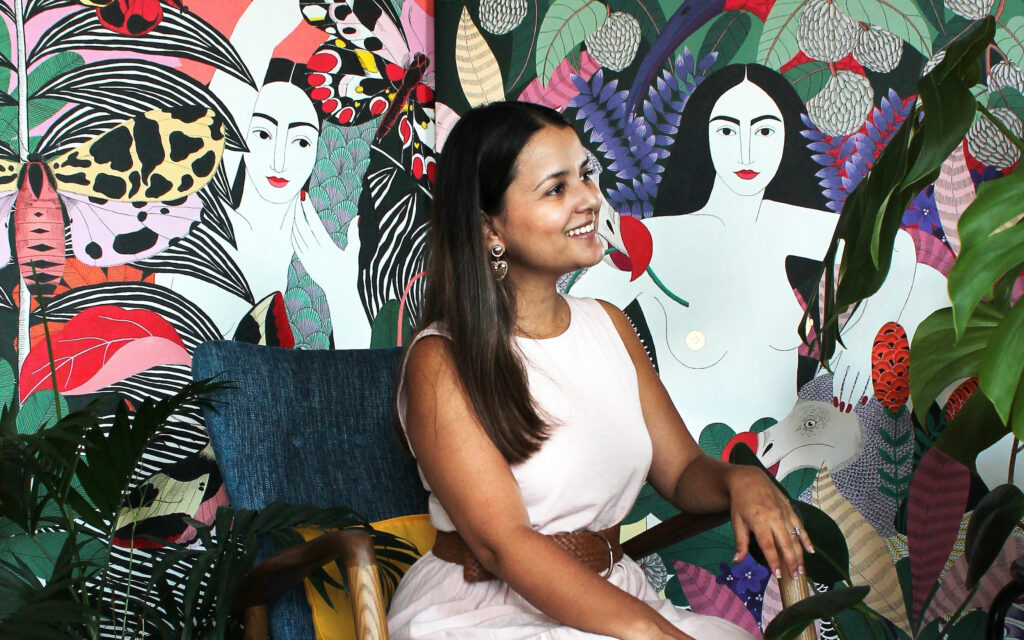
For Mauritian artist Daphné Domhun, that gaze is shaped in particular by the colours, vegetation and emotions of her island. Elements that feed her creative world and can be found in the artwork she imagined for Legend Hill.
Discover in this edition: How do you tell the story of an island without using words?
→ Read our conversation with Daphné
In Mauritius, inspiration does not remain in the studio for long, it finds its way into the kitchen. Mauritian cuisine tells the story of the island in its own way: tropical produce, spices, techniques and recipes inherited from different cultures that, over time, have come together to form a language all their own.
That is also what makes the island so fascinating for chefs arriving from elsewhere. They bring their memories, their techniques and their own way of cooking. Then they encounter a particular ingredient, a spice, a fisherman, a grower, a different approach to food — and what they had imagined at the outset begins to evolve.
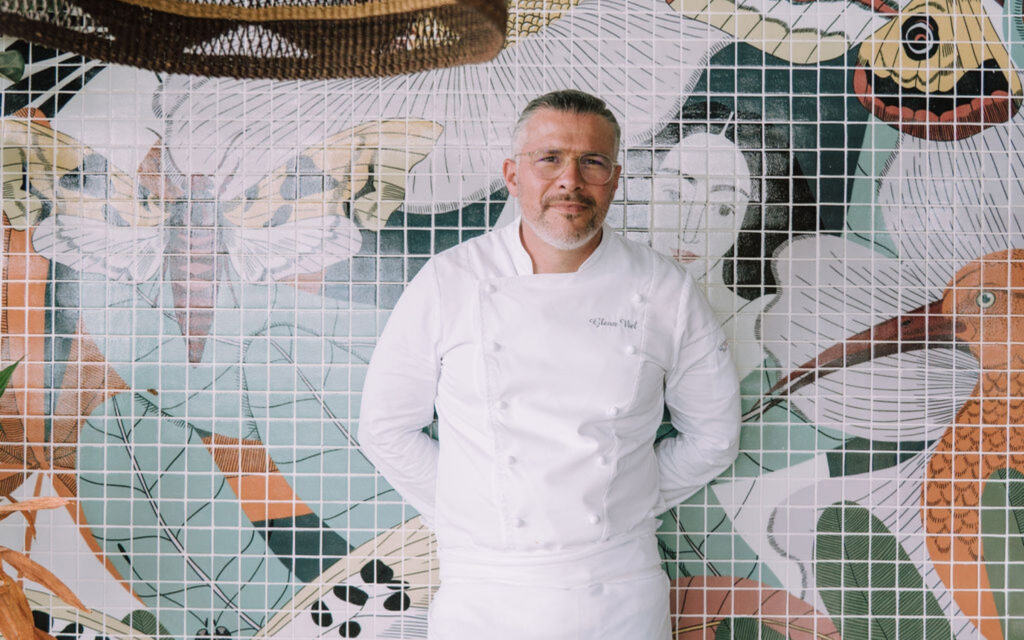
It was in this spirit that Glenn Viel imagined the culinary world of Legend Hill: not to transplant a cuisine conceived elsewhere, but to allow the island itself to find its way onto the plate. Local produce, flavours and inspirations give each of his restaurants its own way of telling the story of Mauritius.
Mauritius does not erase what we bring with us, it transforms it through contact with what is already here. Just enough for something new to emerge.
Architecture faces much the same challenge. How do you design a place when the mountains, lagoon and vegetation have already composed the setting?
At Legend Hill, the landscape is not simply something to admire from afar, it becomes part of the composition itself. The architecture, materials, artworks and perspectives respond to their surroundings, with Le Morne and the lagoon as constant points of reference.
Art, then, is no longer simply something hung on a wall. It might be:
Details we may not always consciously notice… But somehow feel.
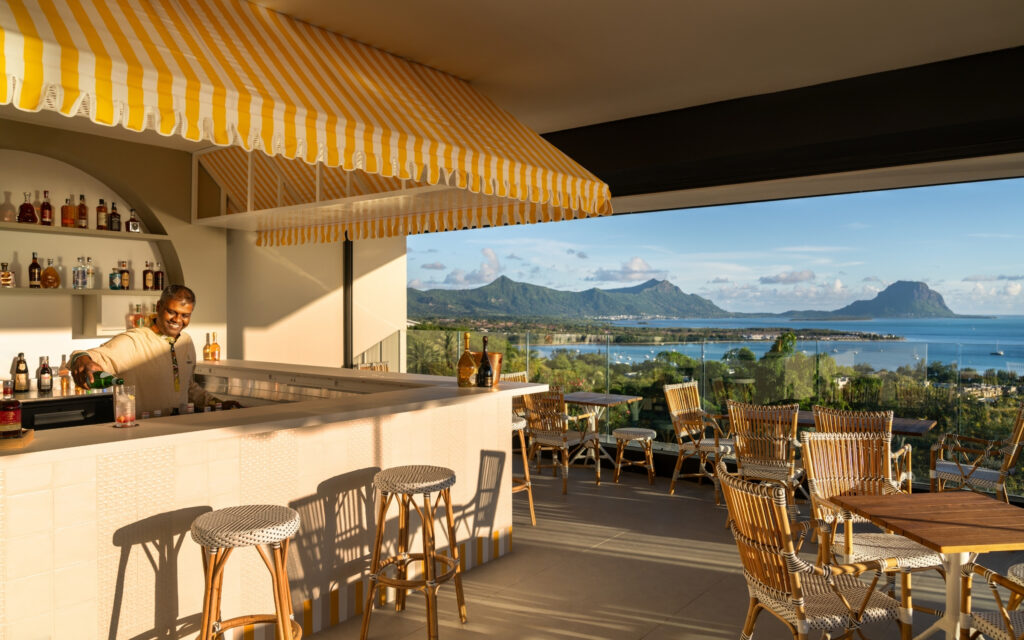
Perhaps that is ultimately what creators come here to find. Not a postcard to reproduce, but something to interpret. Mauritius offers its colours, its contrasts, its heritage, its landscapes and its encounters… What each person creates from them is entirely their own.
And so, in a work of art, a dish or a place imagined here, something of Mauritius almost always remains. Sometimes obvious, sometimes barely perceptible. But never entirely absent.
We come for the landscape. Yet what we remember most is often everything we never expected to find. Mauritius is easily told through images: a lagoon, a beach, a mountain rising above the ocean. It is often how we picture the island before we arrive. Then the journey truly begins. In the course of a single day, you hear several languages. You pass a church, a temple, a mosque or a pagoda. You discover traditions shaped by several continents, alongside a generation creating traditions of its own. Because beyond the destination lies an island in motion. An island that welcomes new influences without forgetting those that shaped it. Many cultures, one island In Mauritius, diversity is not something you visit, it is part of everyday life. African, European, Indian and Chinese heritage has shaped a society where cultures have lived side by side for generations. Each has brought its languages, religions, cuisines, celebrations and ways of seeing the world. And yet the story did not end there. Younger generations travel, study abroad and sometimes return with new references. Talents from other countries settle on the island or collaborate with those who live here. New practices emerge. New projects are born from the meeting of different perspectives. Mauritius continues to evolve in layers: welcoming, adapting and blending, without necessarily erasing what came before. A way of moving forward that can sometimes be found where you least expect it. What the playing field tells us about Mauritius Take rugby. On an island where football and horse racing have historically held an important place in sporting culture, rugby sevens has gradually carved out a space of its own. With it have come new influences, new encounters and a particular sense of community. The growth of the sport tells us something that goes far beyond rugby itself: how a new influence can find its place within a society that already has traditions of its own. Jean-Baptiste Gobelet knows this story well. After France and South Africa, the former French international continued his journey in Mauritius, where he now plays a part in developing rugby on the island. But what interests us here is not so much his sporting career as what the playing field has allowed him to observe: generations coming together, cultures learning to play alongside one another, and a younger generation gradually making the sport its own and writing its own version of the story. Discover in this edition: When Rugby Tells the Story of Mauritius→ Read our conversation with Jean-Baptiste Gobelet An island looking ahead This ability to embrace new influences extends far beyond the playing field. It can be seen in: Gastronomy, creativity, hospitality, architecture and entrepreneurship Expertise from elsewhere meeting local know-how Mauritians returning from studying or working abroad with new ideas Collaborations between people who might never have worked together anywhere else This does not mean Mauritius is leaving behind what it once was. Rather, it reveals an island confident enough in its identity to continue enriching it. This is where the journey becomes particularly interesting. Beyond the landscapes lies a society that resists easy definition: attached to its traditions yet open to the world, insular yet deeply international, familiar and surprising at the same time. Building with the island, not simply on it This dynamic also raises a question for those who come to Mauritius with a project in mind: how do you bring something new without simply reproducing here what has worked elsewhere? Perhaps the answer begins with listening: understanding a place, meeting the people who live there and working with the talent and expertise already present. It also means accepting that an original idea may evolve through contact with the island itself. This thinking has also shaped the story of MJ Développement in Mauritius. When the group imagined Legend Hill on the heights of Rivière Noire, the ambition was not simply to establish a hospitality project within a spectacular landscape, but to create a destination nourished by its surroundings: its talent, produce, artists, teams and way of life. This meeting of perspectives can be found throughout the property: an artwork created by a Mauritian artist, an international culinary vision by Chef Glenn Viel inspired by the island’s produce and flavours, and teams who give each stay its personality. The project begins with a vision. The place transforms it. When a journey becomes a way of life For some, Mauritius will remain the memory of a journey. For others, the island gradually inspires a different thought: what if you could spend part of the year here, build a business or simply begin a new chapter? Because making a life in Mauritius is about far more than choosing an address. It means discovering the island differently, understanding its way of life, its environment and the possibilities available to those who wish to build a more lasting relationship with it. This is also part of the role of MJ Développement: supporting those for whom an attachment to Mauritius begins to extend beyond a holiday, from discovering the island to bringing a property project, and a new way of living, to life. → Discover the possibilities for living and investing in Mauritius Perhaps this is where the real journey begins It is easy to leave Mauritius with images in mind: Le Morne at sunset, the transparency of a lagoon, a road lined with sugar cane, a dinner that lingers a little longer than planned. But discovering an island also means understanding something of the people who live there and the direction in which it is heading. Mauritius is not simply the sum of the cultures that have shaped it. It is also what Mauritians are making of it today, and what future generations will choose to make of it tomorrow. Perhaps this is where another journey begins: the one postcards rarely tell us about.
Enjoy the longest days of the year, warm seas and the festive spirit: weather, activities and essential tips for Mauritius in December.
Spot the 1938 red-roofed church, the view of Coin de Mire and the nearby beaches before visiting Cap Malheureux in northern Mauritius.
La Plantation Marguery
Black River Mauritius
Tel : +230 5509 8168
reservations@legendhill-mauritius.com