
Enjoy the longest days of the year, warm seas and the festive spirit: weather, activities and essential tips for Mauritius in December.
Travelling to Mauritius in December means enjoying the longest days of the year. The coastline enjoys up to 8 hours of sunshine a day, the sea is warm enough for swimming from morning until evening, and the island enters its most festive period. The summer solstice in the Southern Hemisphere, around 21 December, brings the longest evenings of the Mauritian calendar. Our concierges at Legend Hill, a prestigious property in Mauritius, tailor programmes around this exceptional light. Here is everything you need to know about the weather, atmosphere and activities during the month.
December falls at the heart of the Southern Hemisphere summer, the warm season that runs from November to April. The coastline enjoys 7.5 to 8 hours of sunshine per day.
The summer solstice, around 21 December, brings the longest days of the Mauritian calendar and gives the Indian Ocean its most turquoise hues.
From the heights of La Tourelle in Rivière Noire, our team observes the same rhythm throughout the season. The sky clears early, the light turns golden towards the end of the day, and sunset comes later than at any other time of the year. This is why we schedule sea excursions in the morning, spa treatments in the early afternoon and drinks at the end of the day, overlooking the lagoon.
Mauritius in December reveals its liveliest side. Mauritian families and travellers mingle on the beaches, tables fill up, and evenings continue well beyond dinner. This vibrant atmosphere is part of the experience, giving these long summer days an extra energy.
At the stalls of Port Louis and Mahébourg, lychees herald the festive season even before the decorations appear. Christmas is an official public holiday in the Republic of Mauritius, but here it is celebrated in swimwear. Mauritian families head to public beaches from the morning of 25 December, bringing coolers and large pots of food, in one of the most revealing expressions of the local way of life. Our concierge team arranges your sea excursions and dinners in advance, so all you have to do is enjoy the moment.
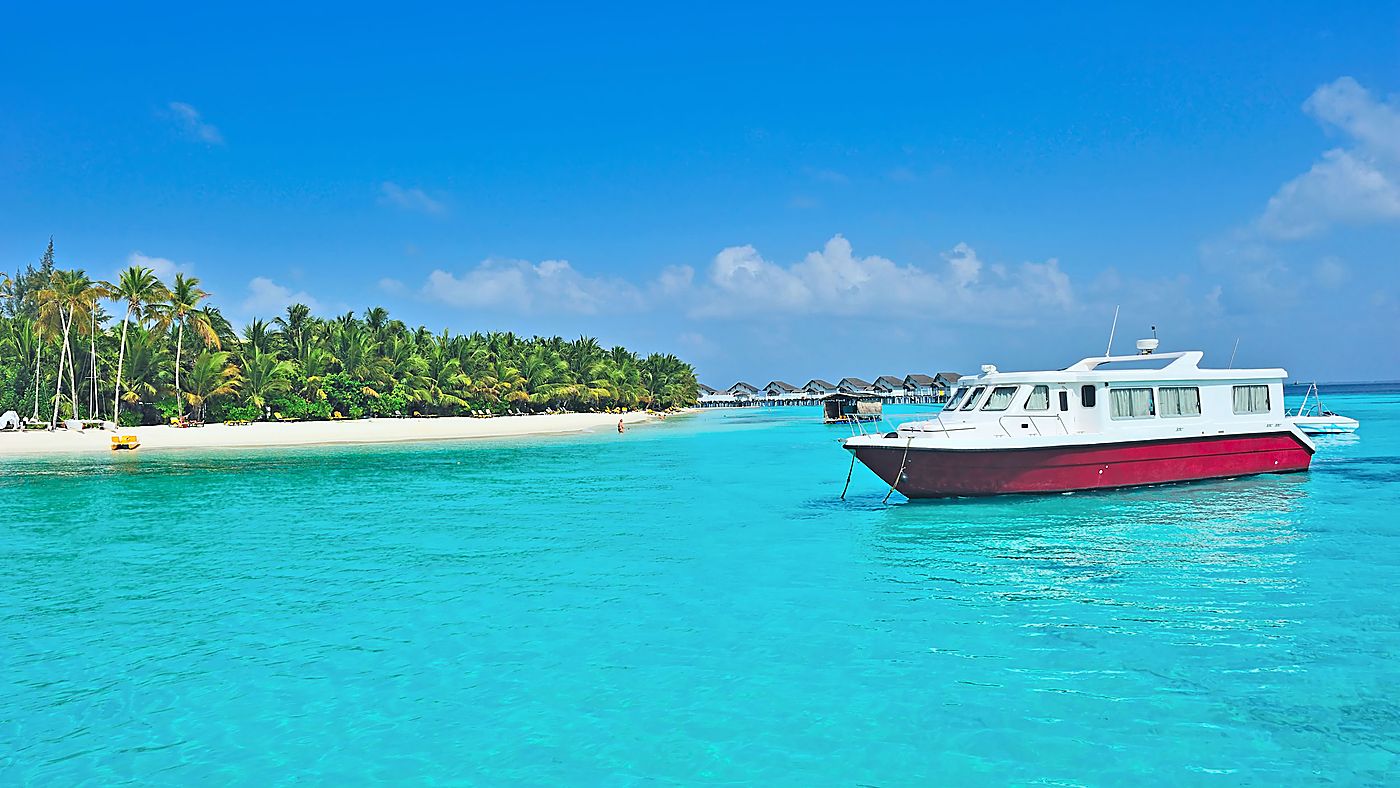
The warm weather and high ocean temperatures open up a wide range of water-based activities, while the long days give you plenty of time to make the most of your stay. Here are the activities that make the most of December:
December is therefore ideal for diving, sea excursions, spa treatments and beach life. Kitesurfing and surfing enthusiasts, however, find their best conditions during the Southern Hemisphere winter.
In December, the light lasts well into the evening, and our guests make the most of it. Rainy days are rare, and a shower often lasts no longer than a coffee break. They head out to sea in the morning, have lunch overlooking the lagoon, then follow it with a spa treatment and drinks.
The western side of the island enjoys the best sunshine in the country, an important advantage when choosing where to stay during the festive season. Our Legend Hill estate occupies this very side of the island, on the heights of La Tourelle, overlooking the lagoon, Le Morne Brabant and Tamarin Bay. The beaches of Flic-en-Flac and Tamarin, diving spots and dolphin excursions are all just a few minutes away.
Our villas accommodate up to five bedrooms, making them ideal for families and groups of travellers coming together for the festive season.
Looking for the most beautiful light for your year-end celebrations? Book your stay at Legend Hill, in one of our villas in Mauritius or in our luxury rooms. Our concierges will organise your Mauritian December, from the lagoon to the mountain peaks.
Fancy spending the holidays facing the lagoon?
Method: the coastal sunshine figures, the limits of the warm season and the January and February highs were taken from the Climate of Mauritius page of the Mauritius Meteorological Services, the public holiday status of Christmas from General Notice No. 611 issued by the Prime Minister's Office, and the field observations and planning advice were supplied by the Legend Hill team, verified in September 2026.
Sunny Malliah started out as a receptionist in Mauritian hospitality in 2003 and now heads the rooms division at Legend Hill: front office, concierge, reservations and housekeeping. Twenty-three years on the ground, a CTH hospitality management diploma and a Cornell certificate, plus the coordination of a 54-room build and a water park project. A great stay, in this view, is above all a well-paced one, much like our one-week itineraries.
We come for the landscape. Yet what we remember most is often everything we never expected to find. Mauritius is easily told through images: a lagoon, a beach, a mountain rising above the ocean. It is often how we picture the island before we arrive. Then the journey truly begins. In the course of a single day, you hear several languages. You pass a church, a temple, a mosque or a pagoda. You discover traditions shaped by several continents, alongside a generation creating traditions of its own. Because beyond the destination lies an island in motion. An island that welcomes new influences without forgetting those that shaped it. Many cultures, one island In Mauritius, diversity is not something you visit, it is part of everyday life. African, European, Indian and Chinese heritage has shaped a society where cultures have lived side by side for generations. Each has brought its languages, religions, cuisines, celebrations and ways of seeing the world. And yet the story did not end there. Younger generations travel, study abroad and sometimes return with new references. Talents from other countries settle on the island or collaborate with those who live here. New practices emerge. New projects are born from the meeting of different perspectives. Mauritius continues to evolve in layers: welcoming, adapting and blending, without necessarily erasing what came before. A way of moving forward that can sometimes be found where you least expect it. What the playing field tells us about Mauritius Take rugby. On an island where football and horse racing have historically held an important place in sporting culture, rugby sevens has gradually carved out a space of its own. With it have come new influences, new encounters and a particular sense of community. The growth of the sport tells us something that goes far beyond rugby itself: how a new influence can find its place within a society that already has traditions of its own. Jean-Baptiste Gobelet knows this story well. After France and South Africa, the former French international continued his journey in Mauritius, where he now plays a part in developing rugby on the island. But what interests us here is not so much his sporting career as what the playing field has allowed him to observe: generations coming together, cultures learning to play alongside one another, and a younger generation gradually making the sport its own and writing its own version of the story. Discover in this edition: When Rugby Tells the Story of Mauritius→ Read our conversation with Jean-Baptiste Gobelet An island looking ahead This ability to embrace new influences extends far beyond the playing field. It can be seen in: Gastronomy, creativity, hospitality, architecture and entrepreneurship Expertise from elsewhere meeting local know-how Mauritians returning from studying or working abroad with new ideas Collaborations between people who might never have worked together anywhere else This does not mean Mauritius is leaving behind what it once was. Rather, it reveals an island confident enough in its identity to continue enriching it. This is where the journey becomes particularly interesting. Beyond the landscapes lies a society that resists easy definition: attached to its traditions yet open to the world, insular yet deeply international, familiar and surprising at the same time. Building with the island, not simply on it This dynamic also raises a question for those who come to Mauritius with a project in mind: how do you bring something new without simply reproducing here what has worked elsewhere? Perhaps the answer begins with listening: understanding a place, meeting the people who live there and working with the talent and expertise already present. It also means accepting that an original idea may evolve through contact with the island itself. This thinking has also shaped the story of MJ Développement in Mauritius. When the group imagined Legend Hill on the heights of Rivière Noire, the ambition was not simply to establish a hospitality project within a spectacular landscape, but to create a destination nourished by its surroundings: its talent, produce, artists, teams and way of life. This meeting of perspectives can be found throughout the property: an artwork created by a Mauritian artist, an international culinary vision by Chef Glenn Viel inspired by the island’s produce and flavours, and teams who give each stay its personality. The project begins with a vision. The place transforms it. When a journey becomes a way of life For some, Mauritius will remain the memory of a journey. For others, the island gradually inspires a different thought: what if you could spend part of the year here, build a business or simply begin a new chapter? Because making a life in Mauritius is about far more than choosing an address. It means discovering the island differently, understanding its way of life, its environment and the possibilities available to those who wish to build a more lasting relationship with it. This is also part of the role of MJ Développement: supporting those for whom an attachment to Mauritius begins to extend beyond a holiday, from discovering the island to bringing a property project, and a new way of living, to life. → Discover the possibilities for living and investing in Mauritius Perhaps this is where the real journey begins It is easy to leave Mauritius with images in mind: Le Morne at sunset, the transparency of a lagoon, a road lined with sugar cane, a dinner that lingers a little longer than planned. But discovering an island also means understanding something of the people who live there and the direction in which it is heading. Mauritius is not simply the sum of the cultures that have shaped it. It is also what Mauritians are making of it today, and what future generations will choose to make of it tomorrow. Perhaps this is where another journey begins: the one postcards rarely tell us about.
Spot the 1938 red-roofed church, the view of Coin de Mire and the nearby beaches before visiting Cap Malheureux in northern Mauritius.
Mauritian Encounter: A Conversation with Daphné Doomun How do you tell the story of Mauritius without words? Mauritius is often discovered through its landscapes. The blue of the lagoon, the mountains, the beaches, the light that shifts throughout the day. Daphné Doomun, however, has always seen the island through the eyes of an artist. Franco-Mauritian, she draws inspiration from another side of the island: its lush vegetation, deep greens, tropical flowers and nature that seems to command attention wherever you look. A world that has long inspired her work and has also found its way into Legend Hill, where one of her creations now sits in dialogue with the landscape that inspired it. With Daphné, we wanted to explore how Mauritius can be told through colour rather than words. Portrait of Daphné Mauritius in one colour?Deep green. The colour of the dense, abundant vegetation that shapes the island’s landscapes. Mauritius in one scent?A delicate blend of fresh floral notes. The fragrances that naturally fill its gardens and tropical vegetation. Mauritius in one sound?Birdsong. A sound woven into the island’s natural surroundings. Mauritius in one word?Mysterious. Because beyond what you discover at first glance, Mauritius always keeps something yet to be revealed. When you think of Mauritius, what is the first image that comes to mind? Above all, the lushness of its vegetation. There is a natural abundance that immediately catches the eye. In Mauritius, vegetation is everywhere: in gardens, across the hillsides, along the roads. It shapes the landscape and gives the island so much of its colour. That is probably the first thing that comes to mind when I think of Mauritius: this abundance of greenery, almost instinctively associated with the island. Is there a particular light, colour or detail of the island that keeps finding its way into your work, almost without you realising it? And how did this inspiration come to life in your creation for Legend Hill? Green, without question. It has become something of a recurring thread throughout my work. And there is never really just one shade of green. Depending on the plants, the light or the surroundings, it takes on countless nuances. When you live surrounded by so much vegetation, it naturally finds its way into what you create. For Legend Hill, nestled into the mountainside, it therefore felt natural to echo the environment surrounding it. I worked with foliage and flowers to bring that tropical abundance into the piece. Another way, ultimately, of bringing the landscape indoors. → Discover Legend Hill and its surroundings If you could show someone Mauritius through just one of your works, which would you choose, and why? I would probably choose Cueillette Tropicale. For me, it is the piece that best captures the abundance and botanical essence of the island. It does not depict a specific place in Mauritius, and that is precisely what I like about it: you do not always need to show a landscape to tell the story of the place from which it was born. Vegetation, a few colours and an atmosphere can sometimes be enough to evoke an island in an entirely different way. Is creating in Mauritius different from creating elsewhere? And what role does the island’s cultural diversity play in its art? It is difficult for me to make a comparison because my creative roots have always been here. But it is hard to live surrounded by such visual richness — the vegetation, the colours, the landscapes — without being influenced by it in one way or another. And Mauritius is, of course, far more than its landscapes. It is an island shaped by many different cultures and influences. This cultural diversity does not dictate a single artistic style. Instead, it offers a vast library of references from which each artist can draw to forge their own identity. Perhaps that is precisely what makes Mauritian art so rich: there is no single way to tell the story of Mauritius. → Discover how Mauritius inspires those who create here When you look at Mauritian art today, what do you see changing or emerging? I feel it is increasingly moving beyond postcard imagery to tell the story of the island from within. Immersive murals, exhibitions in alternative spaces and the emergence of creative hubs are gradually reshaping the local artistic landscape. New ways of creating are emerging and, with them, new ways of portraying Mauritius. If a traveller wanted to discover Mauritius through art and creativity rather than its landscapes, where would you take them? Beyond the lagoons, I would encourage them to lose themselves in the streets of Port Louis and discover its street art. Walking through its streets, looking at its walls and seeing how artists make the city their canvas is also another way of reading Mauritius. The Last Look “In Mauritius, I dream of dodos.” — Daphné Doomun
La Plantation Marguery
Black River Mauritius
Tel : +230 5509 8168
reservations@legendhill-mauritius.com